
On this page
What study abroad advisors do · What study abroad advisors will ask you · How to prepare for a session with study abroad advisors · What good advice sounds like · Matching course and career with study abroad advisors · What happens after the first advisory session · Advising students and parents together · Why a second opinion is healthy · Topics a good advisor should be able to cover · Study abroad advisors at Perspective Education Group · Frequently asked questions
What study abroad advisors do
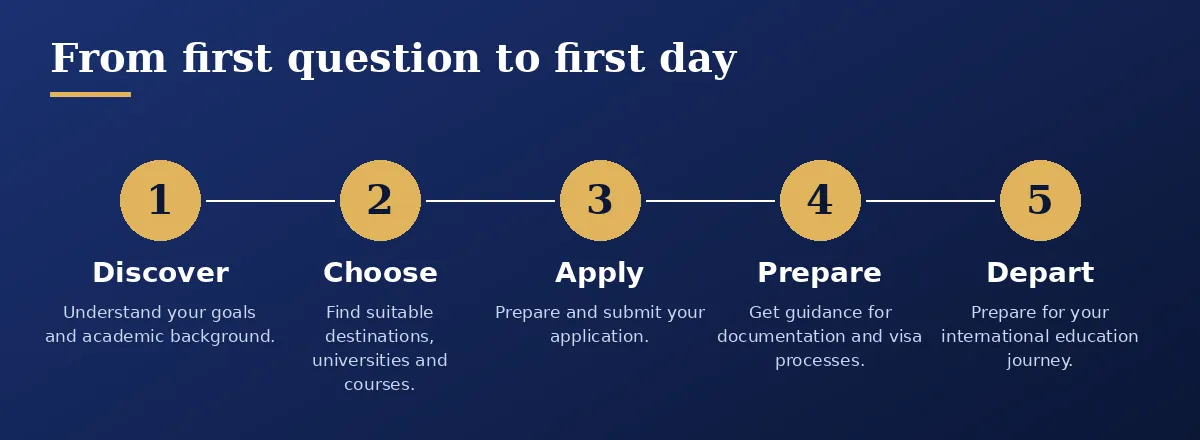
Study abroad advisors act as a sounding board. They review your profile, listen to your goals, explain options and help you decide. Unlike a purely transactional service, advice should leave you better informed even if you decide not to proceed. Advisors also stay available as your plans change, from shortlisting through the visa stage.
If you are comparing advisors against firms, see best study abroad consultants for a scorecard and study abroad consultancy for how firms operate.






What study abroad advisors will ask you
- What do you want to do after your degree?
- What are your marks and any work experience?
- What is your English level, and have you taken a test?
- What budget can your family realistically commit?
- Which countries or cities interest you, and why?
- When do you hope to start?
Honest answers lead to better advice, so share your real budget and marks, not the ones you wish you had.
How to prepare for a session with study abroad advisors
- Collect your latest marksheets and any test scores.
- Write down your career goal, even if rough.
- Agree a budget range with your family.
- List your questions and any countries you have heard about.
- Bring a parent or guardian if you can.
A 15-minute conversation can narrow your options considerably. It is free with us and carries no commitment. Book through the button on this page or call +91 95400 01774.
Want advice on your own profile?
A 15-minute conversation can narrow your country, course and budget. It is free, with no commitment.
Call NowWhat good advice sounds like
Good study abroad advisors explain trade-offs. They say that one country is cheaper but has stricter conditions, or that a course is attractive but the career path is less certain. They answer your questions directly, tell you if a plan is unrealistic and never promise outcomes. They also welcome second opinions, so use them. Explore our FAQ to compare the answers you receive.
Matching course and career with study abroad advisors
The strongest decisions start with the career end. Advisors help you connect interests and strengths to course areas such as business, technology, health, engineering, design or hospitality, then to countries that teach them well and at a price you can manage. Browse our courses and destinations before a session so you arrive with ideas. We also cover cheaper countries if budget is the main constraint.
What happens after the first advisory session
After the first session you should receive a short summary of the options discussed, the next steps and a list of documents to gather. A good advisor does not disappear until you call again. They check in, answer questions as your thinking develops and update you when something changes, such as a new intake or a change in requirements. If you decide not to proceed, they should respect that. Advice is a service, not a trap.
Advising students and parents together
The student and the family often have different concerns. The student may focus on the course and the experience, while parents think about cost, safety and what happens if things go wrong. A good advisor listens to both and helps them reach a decision they can both support. We often suggest a joint session early, and a follow-up with parents once offers arrive. This avoids last-minute disagreements over money or distance.
Why a second opinion is healthy
It is normal and wise to seek more than one view. If an advisor encourages you to talk to others, compare options and verify claims, that is a good sign. If you already have an offer or an agreement with another firm, we are happy to review it and tell you honestly what we think. Use our scorecard to compare what you hear.
Topics a good advisor should be able to cover
- How your marks and background fit the entry requirements of different countries
- Which English tests and scores are accepted and how to prepare
- Typical tuition and living costs, and how to build a realistic budget
- The differences between intakes, courses and universities
- Part-time work rules and how much they can realistically contribute
- Accommodation, health insurance and everyday life abroad
- What to do if an application or visa is refused
If an advisor cannot discuss most of these in plain language, keep looking. If they can, you are likely in good hands. Our FAQ page gives written answers to many of them so that you can compare.
It is also fine to bring a written list of questions to every session and to ask for the answers by message afterwards. Advisors who write things down for you are making it easier to check them later, which is exactly what you want.
Study abroad advisors at Perspective Education Group
Our counsellors in Sector-18, Noida, advise students and parents in person and remotely across India. You can meet them on the About page and read student journeys on success stories. For expert-level topics such as country rules or funding, see study abroad experts.

Frequently asked questions
What do study abroad advisors do?
They give personal guidance on country, course, university and budget, and support you through applications and visa preparation.
Is advising different from counselling?
The terms overlap. Both involve one-to-one guidance based on your profile and goals.
What should I bring to my first session?
Your marksheets, any test scores, a rough career goal and a budget range agreed with your family.
Can my parents join?
Yes, and we encourage it. Many questions involve cost, safety and recognition.
Can an advisor tell me if I should not study abroad?
A good one will. Honest advice includes saying when waiting or choosing another route is wiser.
How long is a session?
A first conversation is usually around fifteen to thirty minutes, depending on how much you want to cover.
Can I get advice online?
Yes. We advise by phone, WhatsApp and email, and you can also visit our Noida office.
Is advice free?
The first consultation is free with no commitment.
Can an advisor review an offer I already have?
Yes. We can review offer conditions, costs and timelines and explain what they mean.
Do advisors help with career planning?
Yes. Career and course counselling is part of our service, helping you link a course to the roles you want.