
On this page
Why a plan matters when you study overseas · A month-by-month plan with study overseas consultants · English tests and academic requirements · Documents study overseas consultants will ask for · Money decisions when you study overseas · Choosing the right intake · Understanding the visa stage · Before you fly: pre-departure checklist · Building a realistic overseas study budget · Study overseas consultants at Perspective Education Group · Frequently asked questions
Why a plan matters when you study overseas
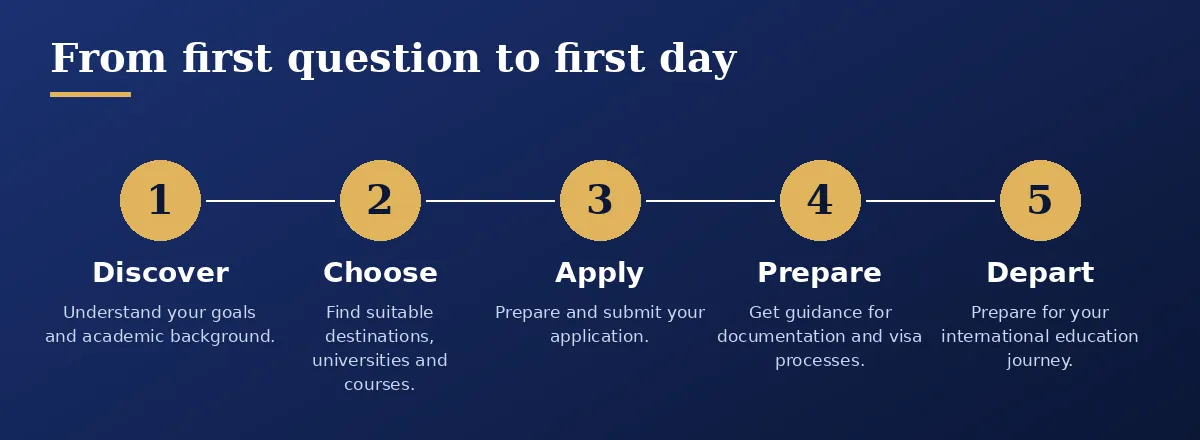
Most problems students face when they study overseas are timing problems: a missed intake, a test taken too late or documents that took weeks longer than expected. Study overseas consultants earn their keep by building a calendar backwards from your intake date and keeping you on it. If you are not sure whether you want to go at all, start with our page on abroad education consultants.






A month-by-month plan with study overseas consultants
- Months 12 to 10 before intake. Free consultation, goal setting, budget and country comparison.
- Months 10 to 8. Shortlist universities, check entry requirements and decide on an English test if needed.
- Months 8 to 6. Collect transcripts, passport and recommendation letters, and draft your personal statement.
- Months 6 to 4. Submit applications, track them and respond quickly to any university questions.
- Months 4 to 3. Review offers with your family, accept one and pay any required deposit.
- Months 3 to 2. Prepare funds evidence and begin the visa process.
- Final 2 months. Book accommodation and travel, arrange insurance and money and attend pre-departure guidance.
English tests and academic requirements
Many universities ask for evidence of English, either through a recognised test or through your prior education in English. Requirements depend on the university and course, and some institutions accept alternatives. Your counsellor should tell you which tests each shortlisted university accepts and the score you need, so you do not pay for the wrong one. Tests are run by independent bodies, so book early and check validity periods.
Want advice on your own profile?
A 15-minute conversation can narrow your country, course and budget. It is free, with no commitment.
Call NowDocuments study overseas consultants will ask for
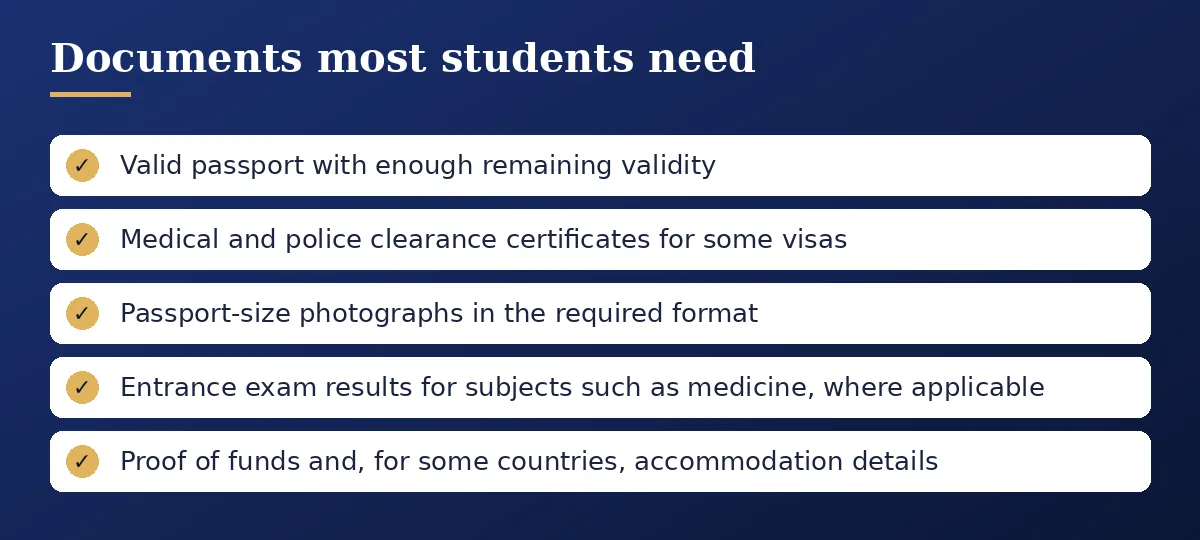
- Academic transcripts and certificates
- Passport valid for the full period required
- English-language evidence, where required
- Personal statement and recommendation letters
- Proof of funds and financial documents for the visa
- Photographs and any country-specific forms
We give you a country-specific checklist so nothing is a surprise. Our guide to study abroad with low bank balance requirements explains proof of funds in detail.
Money decisions when you study overseas
Decide how tuition will be paid, how you will show funds and how you will receive money abroad. Ask your consultant to build a budget and to flag any gaps early. The cost guides on studying abroad and cheaper destinations will help you set a range.
Choosing the right intake
Many countries have one main intake in autumn and some have a second in early spring. Choosing between them depends on your readiness, your documents and the course. A well-prepared application for the main intake is usually better than a rushed application for an earlier one. Study overseas consultants should tell you which intakes each university offers, the application deadlines for each and any differences in scholarship or accommodation availability. Always confirm the dates with the university.
Understanding the visa stage
The student visa is the last major hurdle and often the most stressful. Requirements differ by country but typically include an offer or confirmation of enrolment, a valid passport, proof of funds, insurance and sometimes a medical or police certificate. Processing times vary and may change, so apply as soon as you can once you have your offer. Our consultants give you a country-specific checklist and review your file before submission, but visa decisions belong to the authorities. Our Cyprus study visa guide is an example of the detail we provide.
Before you fly: pre-departure checklist
- Confirm accommodation for at least your first weeks
- Arrange health insurance valid from arrival
- Plan how to carry or transfer money safely
- Photocopy important documents and keep digital backups
- Learn basic local phrases and transport options
- Share your address and flight details with family
Building a realistic overseas study budget
List costs under four headings: before you go, tuition, living and unexpected. Before you go covers application fees, tests, document attestation, visa fees, medical checks and flights. Tuition is the annual fee multiplied by the number of years. Living includes rent, food, transport, phone, books and leisure. Unexpected covers emergencies and currency changes. Add up each year separately, because fees and living costs may rise. Then compare the total with your funding plan, and ask your consultant to challenge any figure that looks optimistic. Our cost of studying abroad guide has a fuller breakdown.
If the total is more than your family can fund, tell your counsellor immediately. There are often more affordable destinations and courses, and discovering this early is far better than discovering it after an offer.
Study overseas consultants at Perspective Education Group
We guide students on Russia, Cyprus, Malta, Mauritius, Serbia, Latvia, Singapore and South Korea from our Noida office and by phone and WhatsApp across India. See our process for how each stage works and our services for what we handle. For the application stage in detail, read about overseas admission consultants.

Frequently asked questions
What do study overseas consultants do?
They plan your route from shortlisting through applications, documents, visa and departure, and keep you on schedule.
When should I start planning to study overseas?
Eight to twelve months before your intended intake.
Which English test should I take?
It depends on your university and course. Check which tests each shortlisted institution accepts before booking one.
What if I am late and have only a few months?
Tell your counsellor immediately. Some universities have later deadlines or additional intakes, but options narrow as time passes.
How do I show funds for the visa?
Requirements vary by country. Your consultant should give you the exact documents and amounts expected, which you should verify with the authorities.
Can I change my plan after applying?
Often yes, but deposits and deadlines may limit changes. Discuss risks with your counsellor before paying anything.
Do study overseas consultants help with accommodation?
We guide you on accommodation options as part of pre-departure support, but arrangements depend on the university and city.
Is the first consultation free?
Yes, with no commitment.
How soon after the offer should I apply for the visa?
As soon as you have the documents the embassy requires. Processing times can vary, so do not wait until the last month.
What should I carry when I travel?
Your passport, offer and visa documents, accommodation details, insurance papers and some local currency, with copies stored separately.